What is AI Streaming?
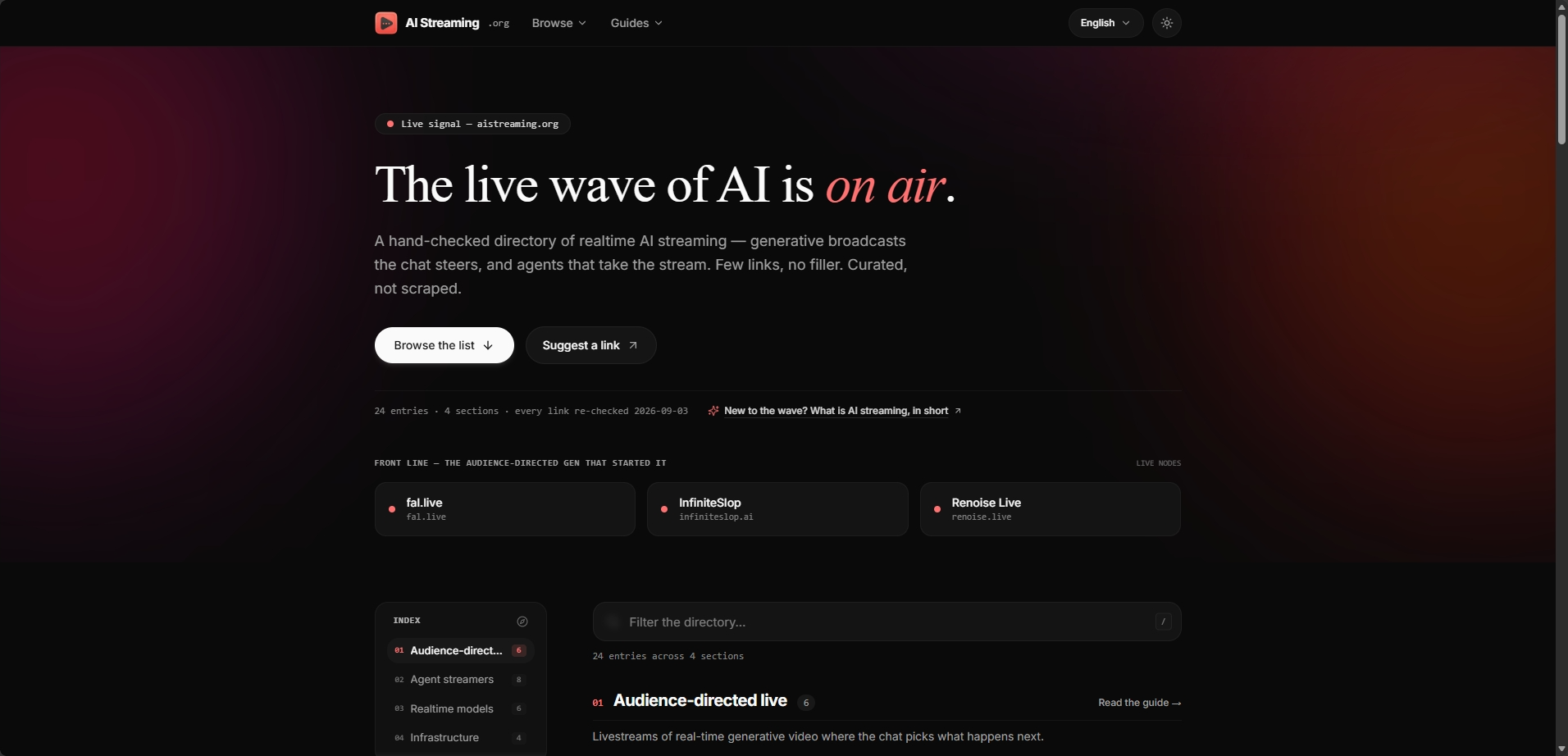
AI Streaming is a curated directory of live AI streaming projects and the technology behind them. It groups resources into audience-directed broadcasts, agent streamers, realtime video models and infrastructure. Visitors can read short descriptions and follow links to individual projects, with guides providing context for how continuously generated media and AI-hosted livestreams work.
The directory emphasizes manual selection and link checks rather than scraped listings. Its stated scope includes generative broadcasts that viewers can influence and agents that carry a stream, while excluding video editors, avatars and VTubers as general categories. The supplied homepage lists 27 entries across four sections and displays October 2, 2026 as its latest re-check date. It describes listings as independent references rather than endorsements.
Who it's for
- Viewers exploring interactive AI broadcasts
- Streamers researching AI hosts and co-hosts
- Developers comparing realtime generation resources
- Researchers tracking AI streaming projects
How to use AI Streaming
- 1
Choose a directory section
Browse audience-directed live broadcasts, agent streamers, realtime models or infrastructure according to the resource needed.
- 2
Read the entry descriptions
Use each short summary to understand a project's role, then follow its outbound link to explore the project itself.
- 3
Consult the guides
Open the guides on AI streaming, AI live streaming, AI streamers or realtime video models for background on these categories.
- 4
Contribute a correction or suggestion
Use the site's links to suggest a resource or report an entry that is unavailable or inaccurate.
AI Streaming key features
Audience-directed live broadcasts
A dedicated section covers generative streams where chat messages, prompts or votes influence what happens next.
AI streamers
The agent section brings together autonomous hosts, AI clones, co-host tools and self-hosted streaming projects.
Realtime video models
Model listings summarize technologies used for continuous generation, interactive worlds and live-feed transformation.
AI streaming infrastructure
Infrastructure entries cover generative inference, realtime audio and video transport, pipeline runtimes and model serving.
Manual curation and visible check dates
The site states that links are checked by hand, unavailable links are removed and new resources are reviewed before inclusion.
Guides and open data
The navigation includes introductory guides, an RSS link and an open-data link labeled CC0.
AI Streaming use cases
Find an interactive broadcast
Viewers can browse projects where audience input helps direct an ongoing generative show.
Research AI hosting options
Streamers can discover projects that present, react to chat or help operate a livestream.
Explore a realtime generation stack
Developers can use the model and infrastructure sections as starting points for researching the components behind live generative media.
Understand the streaming landscape
Researchers and newcomers can compare the directory's four categories and consult its introductory guides.
How AI Streaming is built
The submitter identifies ShipAny TanStack as the template, and the homepage credits ShipAny. The visible product is a directory with outbound links; the supplied page does not establish use of ShipAny's ready-made authentication, payments, subscriptions or credits.
View the ShipAny TanStack templateAI Streaming FAQ
What is AI Streaming?
AI Streaming is a manually curated directory of live generative broadcasts, AI hosts, realtime models and supporting infrastructure. It links visitors to the listed projects.
How is AI streaming different from generating a video clip?
The site's explanation distinguishes media generated continuously during a broadcast from a finished clip rendered beforehand. Continuous generation allows direction and outcomes to change while the stream is running.
How can visitors find AI streamers?
The Agent streamers section lists projects involving autonomous hosts, AI co-hosts and other agents that carry or assist a broadcast. Each entry provides a description and a project link.
Where are realtime video models listed?
The Realtime models section collects generation technologies relevant to live video and interactive worlds. Supporting inference and transport tools appear separately under Infrastructure.
How current are the directory links?
The supplied homepage shows a re-check date of October 2, 2026. The site states that entries are manually re-verified and unavailable links are removed.
Can visitors suggest a project?
Yes. The site provides a Suggest a link option and a separate link for reporting unavailable or incorrect entries.
This introduction is based on the public pages of aistreaming.org, read on October 9, 2026.