What is TokenBoard?
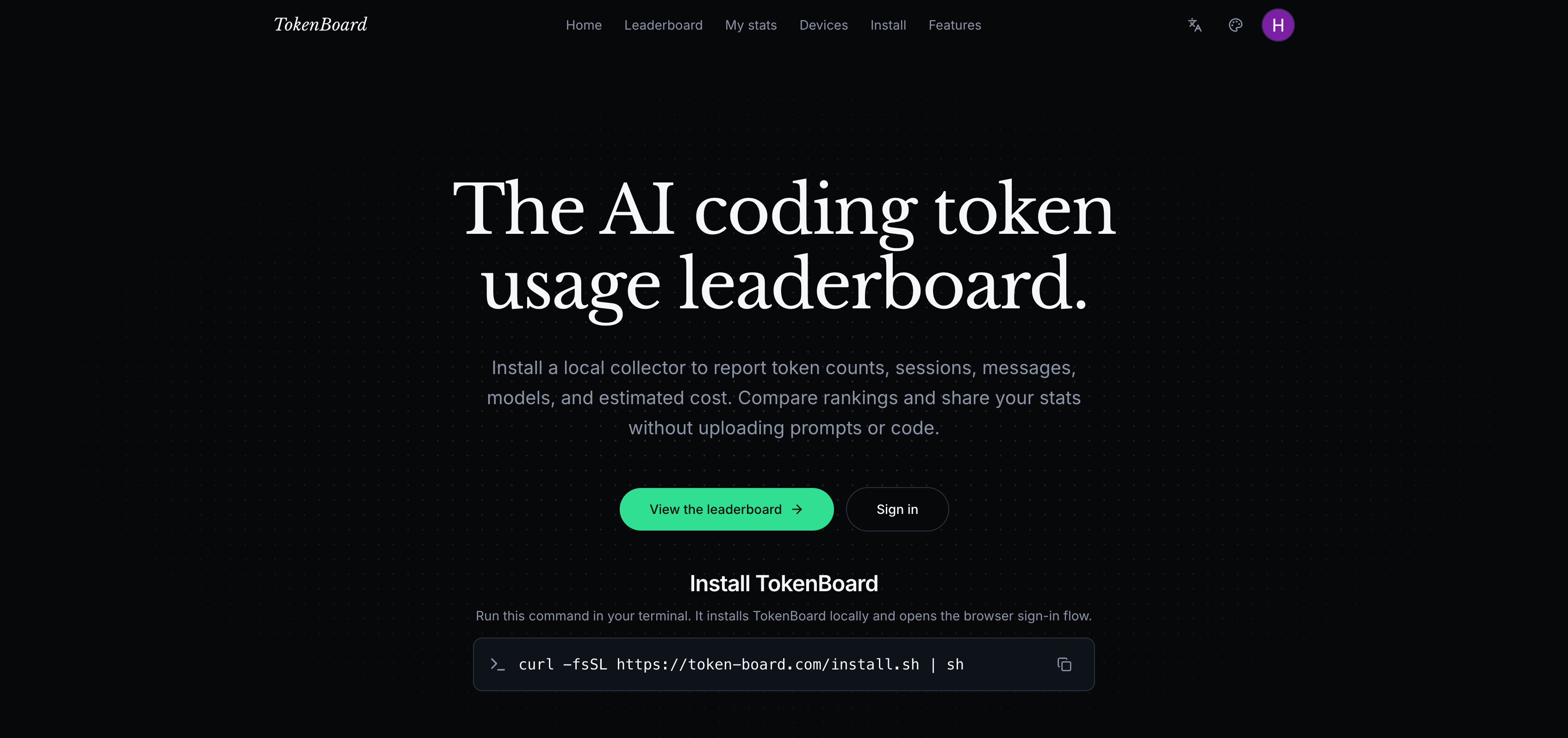
TokenBoard is an AI coding usage leaderboard and token usage tracker for comparing activity reported by participating developers. Its local CLI collects session telemetry from Codex and Claude Code, converting it into token totals, session counts, messages, model usage, and estimated costs. Users can explore rankings to understand how their reported activity compares with others across several metrics.
The product combines aggregate AI coding metrics with activity views and shareable profile cards. A yearly heatmap reveals active periods, while individual day views show session timing, model mix, and token breakdowns. Recent sessions are reported first, with older available history added over time. Its privacy approach keeps prompts, assistant responses, command output, and raw local session identifiers on the user's device; the service stores reported metrics and hashes.
Who it's for
- Developers using Codex or Claude Code
- AI coding users tracking token consumption
- Developers comparing reported usage
- Creators sharing coding activity stats
How to use TokenBoard
- 1
Install the local client
Run the terminal installation command provided on TokenBoard's homepage to install the local CLI and open the browser sign-in flow.
- 2
Sign in and report usage
Complete browser sign-in. The supported collectors read local Codex and Claude Code session telemetry and report usage totals while keeping prompt and response text local.
- 3
Explore rankings and history
Compare reported usage in the leaderboard, review the activity heatmap, and open a day to inspect its sessions, models, tokens, messages, and estimated cost.
- 4
Share a usage card
Turn profile statistics into a vertical card showing usage totals, active days, messages, estimated cost, tool mix, and recent activity.
TokenBoard key features
AI token leaderboard
Sortable rankings compare participating users by reported tokens, sessions, messages, estimated cost, models, or observed skills.
AI coding activity history
A yearly heatmap shows activity patterns, and day views reveal the sessions behind each date. Older available local sessions are progressively backfilled.
Model cost estimates
Estimated spend can be viewed by model, user, and activity period to add cost context to token usage.
Local telemetry collectors
The CLI supports local Codex and Claude Code session telemetry. Its collector design allows additional coding agents to be added.
Shareable usage cards
Profile cards summarize usage and recent activity in a compact vertical format without displaying prompts or code.
Metrics-focused reporting
TokenBoard stores reported metrics and hashes. Prompt text, assistant output, command output, and raw local session IDs remain local.
TokenBoard use cases
Review AI coding metrics
Track tokens, sessions, messages, and model mix to understand patterns in reported coding-agent activity.
Compare usage across participants
Use sortable rankings to compare reported activity across developers, models, and observed skills.
Inspect active days
Open heatmap dates to examine session timing and token breakdowns behind busy or quiet periods.
Share activity summaries
Publish a profile card with usage statistics and recent activity while keeping prompts and code off the card.
How TokenBoard is built
The submitter identifies ShipAny Next as the template used for TokenBoard. Its visible browser sign-in flow aligns with ShipAny's ready-made authentication capabilities; the supplied page does not establish which underlying components are used.
View the ShipAny Next templateTokenBoard FAQ
What is TokenBoard?
TokenBoard is a leaderboard for reported AI coding usage. It summarizes local agent activity into tokens, sessions, messages, model mix, and estimated cost.
How do I set up TokenBoard as a token usage tracker?
Run the installation command on the homepage and complete the browser sign-in flow. The local CLI collects supported session telemetry and reports usage totals.
Which AI coding agents does TokenBoard support?
The supplied page identifies Codex and Claude Code as supported local collectors. It describes the collector system as extensible to additional agents.
Does TokenBoard upload prompts or code?
The site states that prompts, assistant output, command output, and raw local session IDs stay local. TokenBoard stores reported metrics and hashes.
Are TokenBoard's model cost estimates actual bills?
The page labels cost figures as estimates. It does not explain the calculation method or establish billing-grade accuracy.
How can I inspect my AI coding activity history?
Use the yearly activity heatmap and open a day to inspect its sessions. Day details include session timing, model mix, token breakdowns, messages, and estimated cost.
This introduction is based on the public pages of token-board.com, read on October 9, 2026.