
What is iPurix?
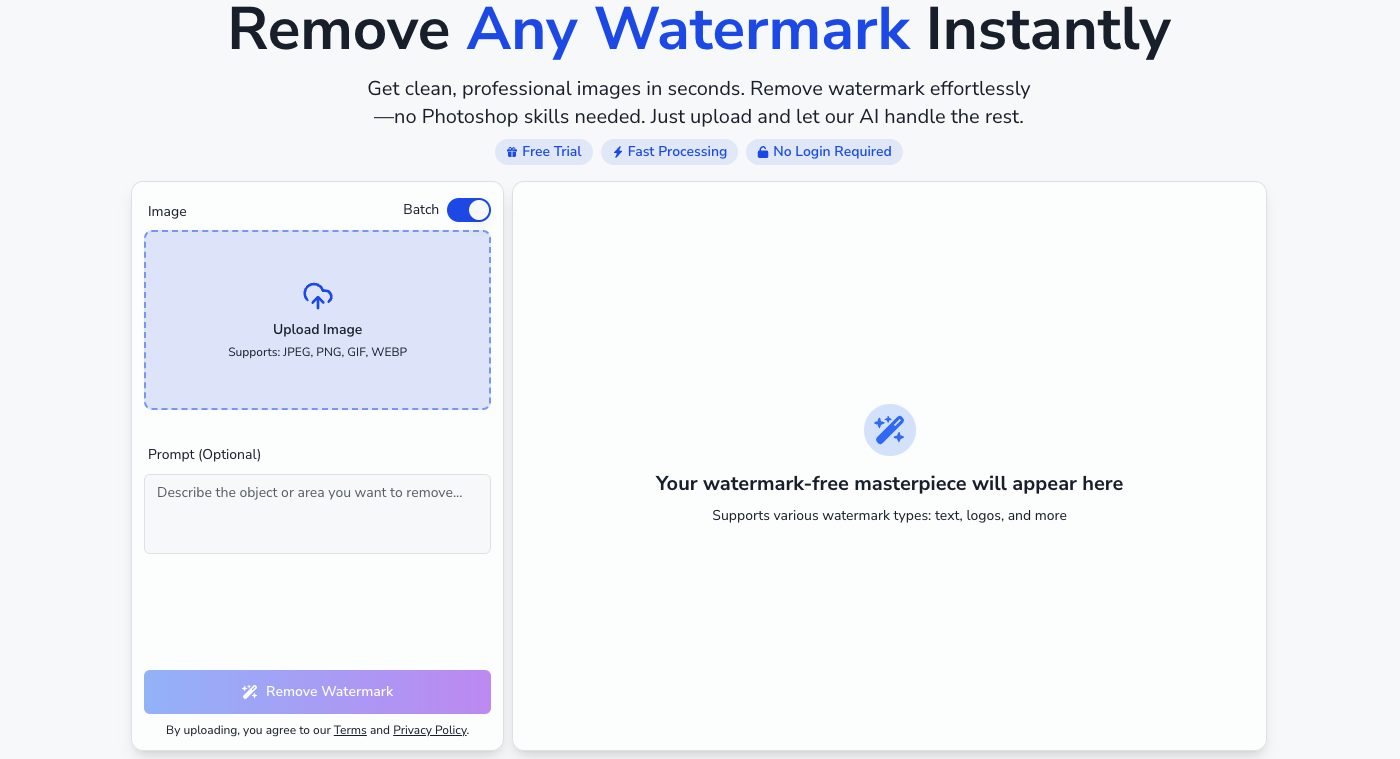
iPurix is a browser-based AI watermark remover built to remove watermarks from images. It detects visible overlays such as logos, text, stamps and tiled patterns, erases them and reconstructs the pixels underneath, so the result is meant to look as if the image was never marked. The site notes that results depend on the image and the type of watermark, and output dimensions may differ from the original.
To remove a watermark, users upload an image, let the AI process it, and download the cleaned file. Anyone can view a pre-made sample result without signing in, while processing your own images requires purchased credits. Uploads are encrypted and deleted from the servers within 24 hours, the tool runs in mobile browsers with no app to install, and signed-in users can process several images at once. The site also stresses that users are responsible for having the rights to images they edit.
Who it's for
- Photographers recovering their own proofs
- Designers and marketers working with licensed stock
- E-commerce sellers reusing their own product photos
- Creators cleaning marks from AI-generated images


How to use iPurix
- 1
Upload an image
Drag and drop a JPEG, PNG or WEBP file of up to 10 MB into the editor, optionally adding a prompt.
- 2
Let the AI remove the watermark
The model locates the watermark automatically, erases it and fills in the background behind it.
- 3
Download the clean image
Save the processed, watermark-free result to your device.
iPurix key features
AI watermark removal with background reconstruction
Instead of blurring the marked area, the AI rebuilds the hidden pixels while aiming to keep the composition and surrounding detail intact.
Remove logos, text and stamps from images
Handles text overlays, logos and badges, date and time stamps, repeating diagonal patterns and stock-proof grids.
Gemini watermark remover for AI images
Treats badges added by generators such as Gemini, Veo and Meta AI like any other logo, with a dedicated page for Google's Gemini mark.
Batch watermark removal
Signed-in users with credits can process multiple images in one go on paid plans.
Privacy handling
Uploaded files are encrypted and automatically removed from the servers within 24 hours.
Works in the browser
Everything runs in desktop or mobile browsers, so there is no software or app to install.

iPurix use cases
Recovering a photographer's own proof
When only a watermarked studio proof remains and the original file is lost, the photographer can clean the overlay off the proof.
Cleaning purchased stock for mockups
Designers who bought stock but received a watermarked copy can clear it for client comps, while handling the licensing themselves.
Relisting your own product photos
E-commerce sellers can strip an old shop logo or date stamp from photos they took before moving to a new storefront.
Removing generator badges
AI creators can erase the visible marks that image generators leave on images they produced.
iPurix FAQ
What is iPurix?
iPurix is an online AI watermark remover that removes visible logos, text and stamps from images and reconstructs the background behind them.
Is iPurix free?
You can view a pre-made sample result for free without logging in. Processing your own images requires credits, which are sold on paid plans.
How do I remove a watermark from an image with iPurix?
Upload the image, wait while the AI erases the watermark and fills in the background, then download the processed result.
Which watermark types and file formats does the watermark remover support?
It handles text overlays, logos, stamps, date stamps and repeating patterns. Uploads can be PNG, JPG/JPEG or WEBP files up to 10 MB.
Can iPurix work as a Gemini watermark remover for AI-generated images?
Yes. Badges from generators like Gemini, Veo and Meta AI are treated like other logos, and the site has a dedicated Gemini watermark page.
Is it legal to remove watermarks?
The site says it is fine for images you own or have rights to, such as your own photos or purchased stock. Removing watermarks from copyrighted images without permission may break laws like the DMCA, and users are responsible for how they use the results.
This introduction is based on the public pages of remove-watermark.org, read on October 9, 2026.